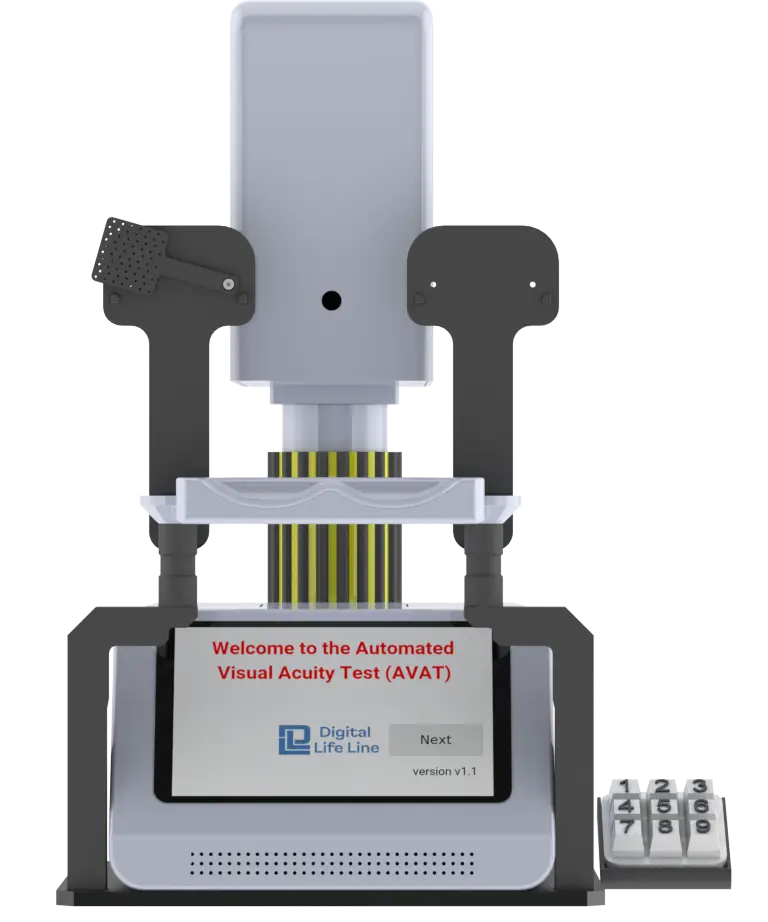
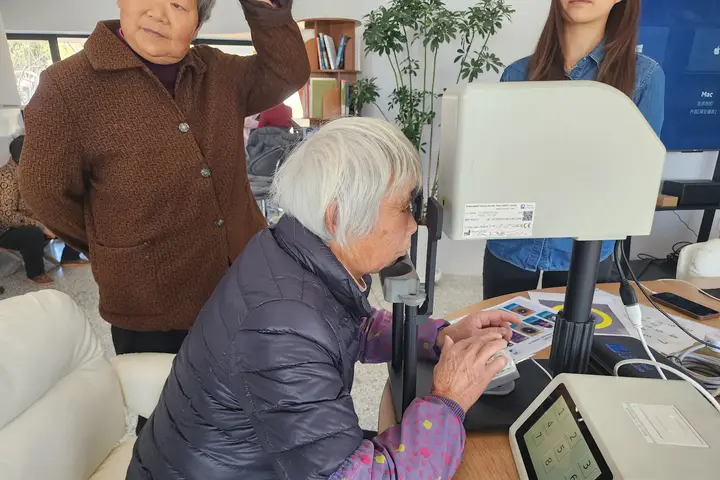
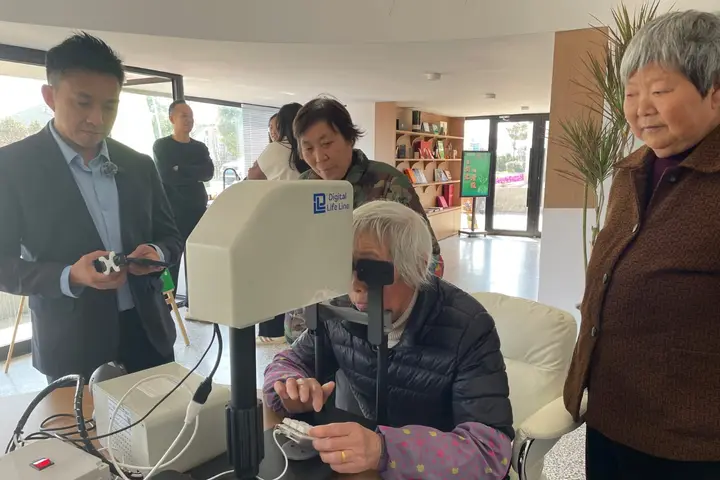
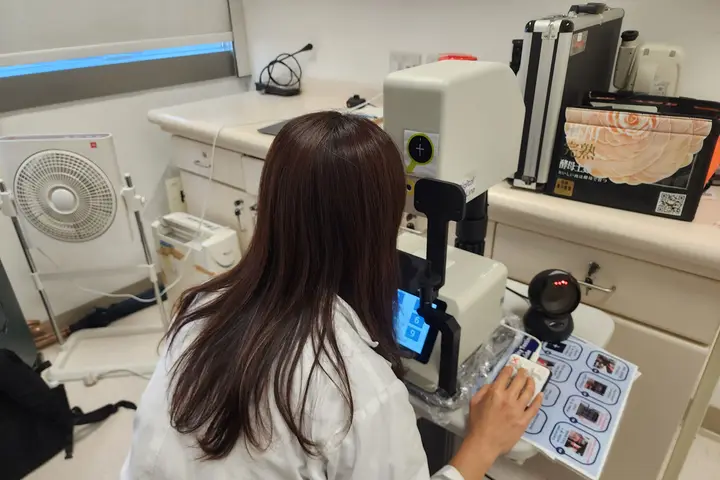
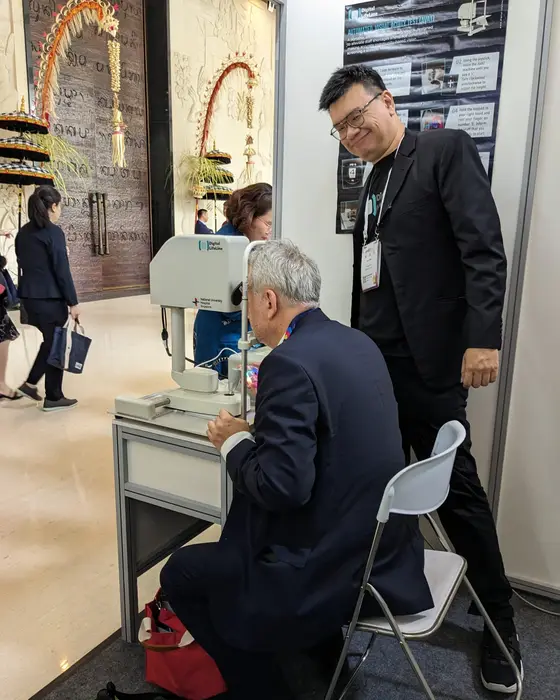
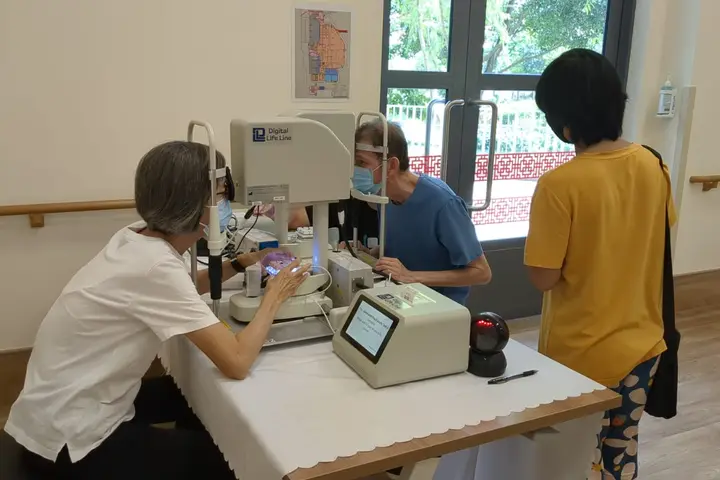
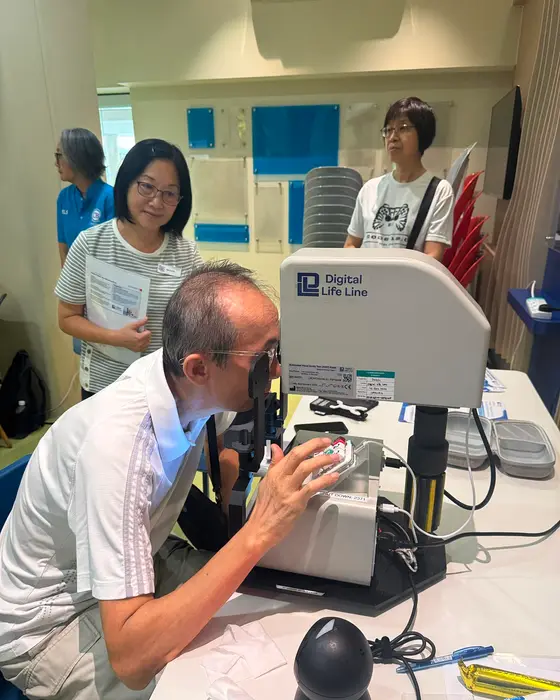
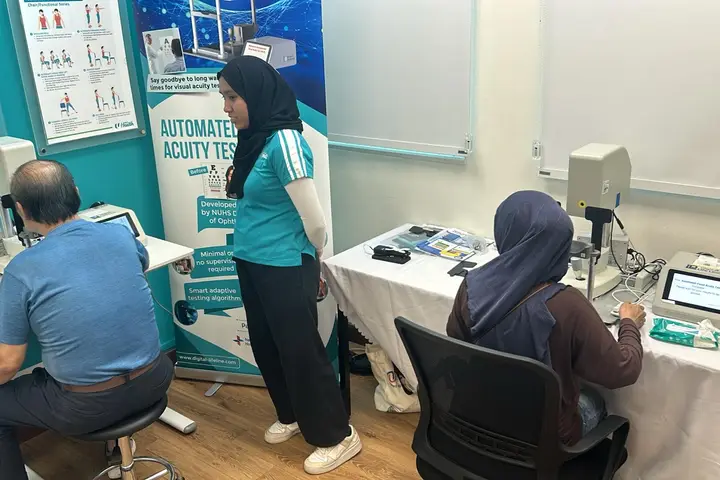
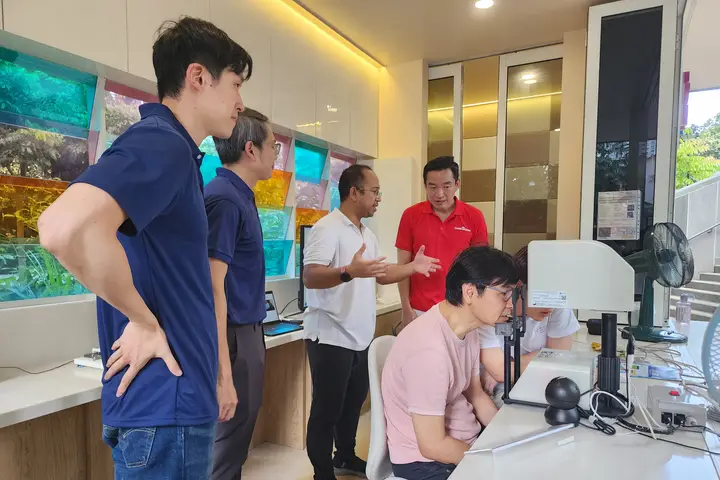
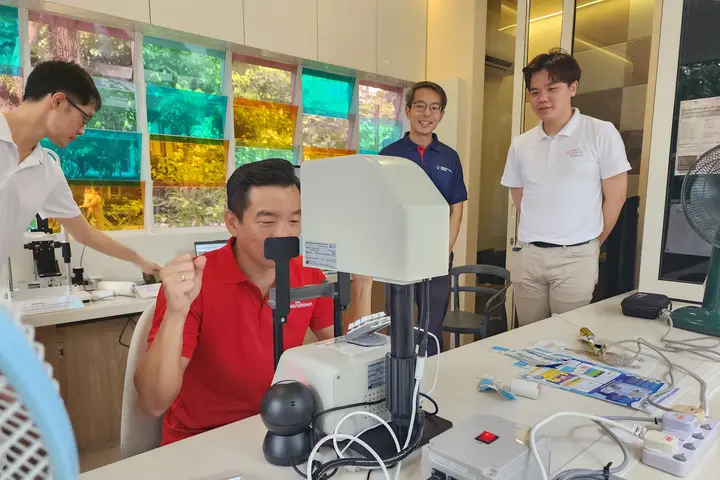
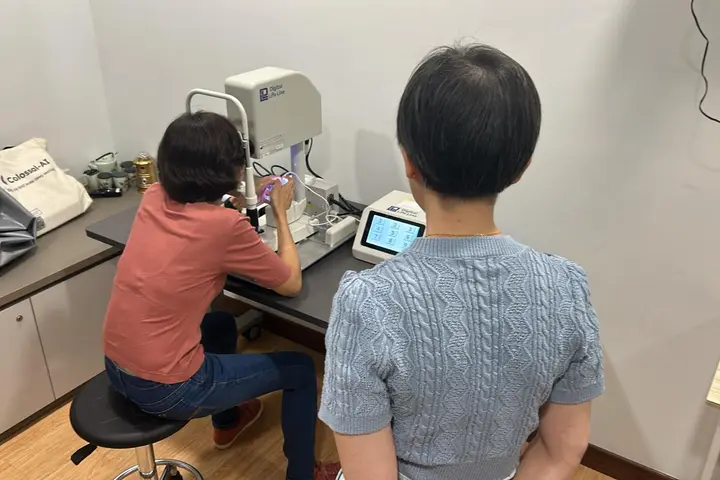
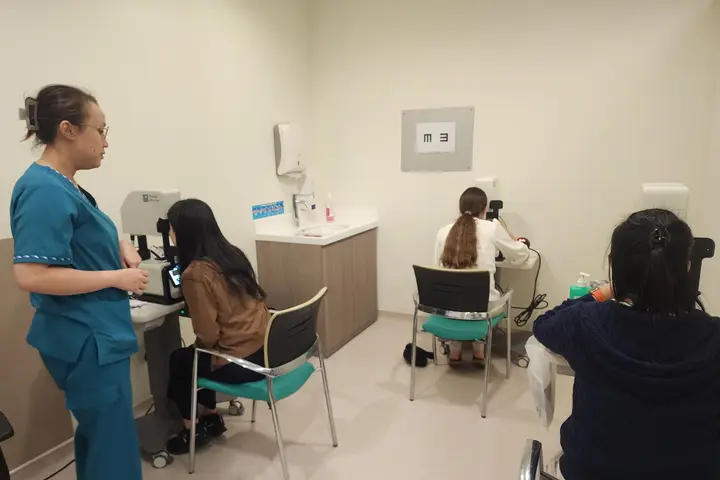
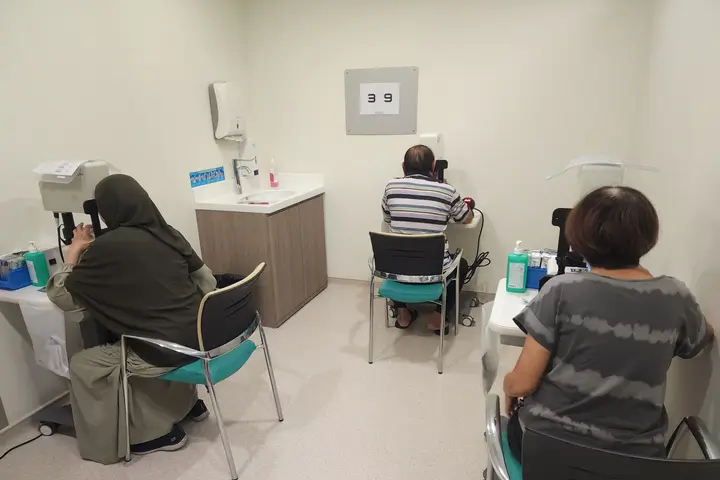
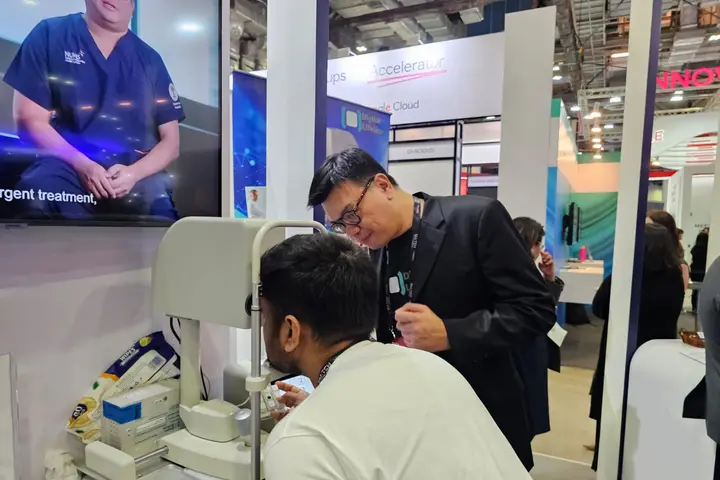
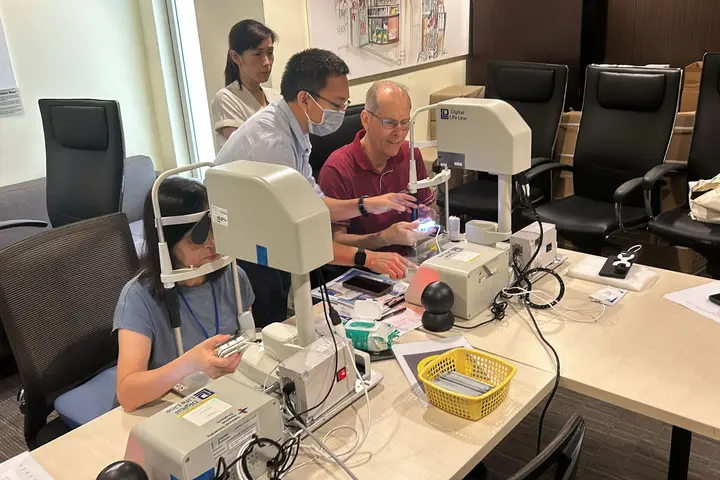
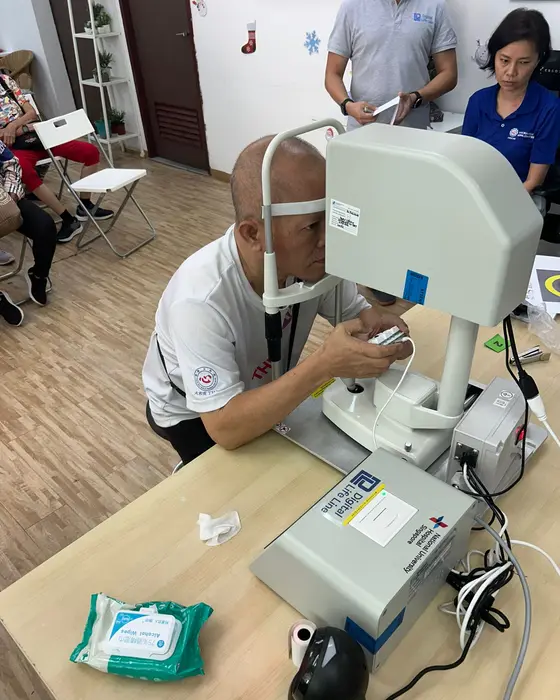
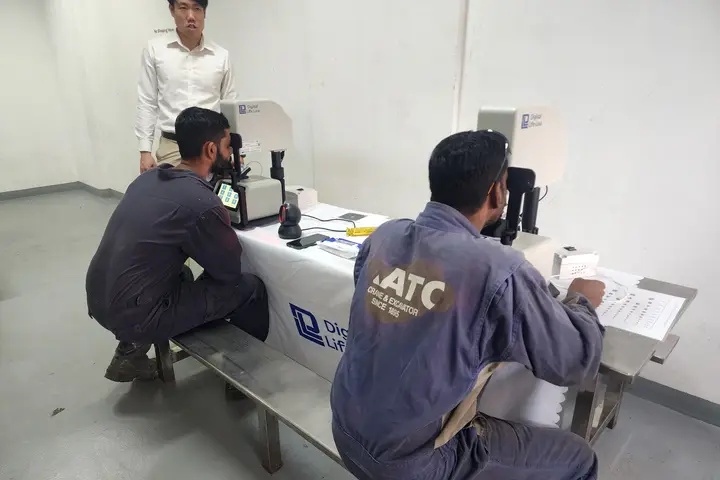
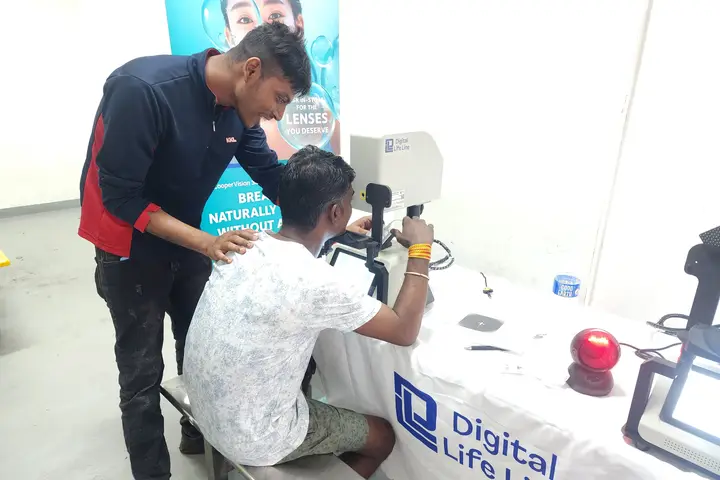
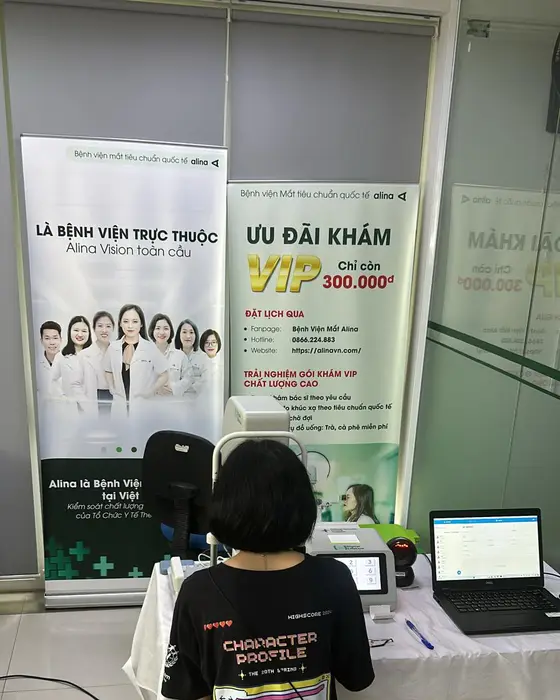
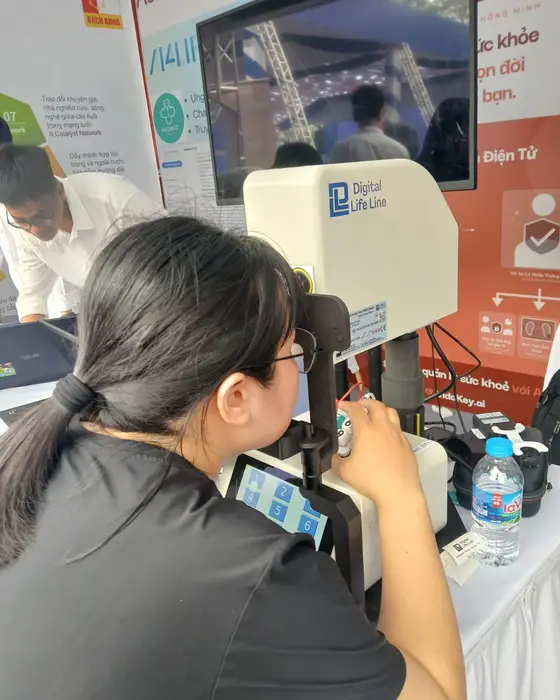
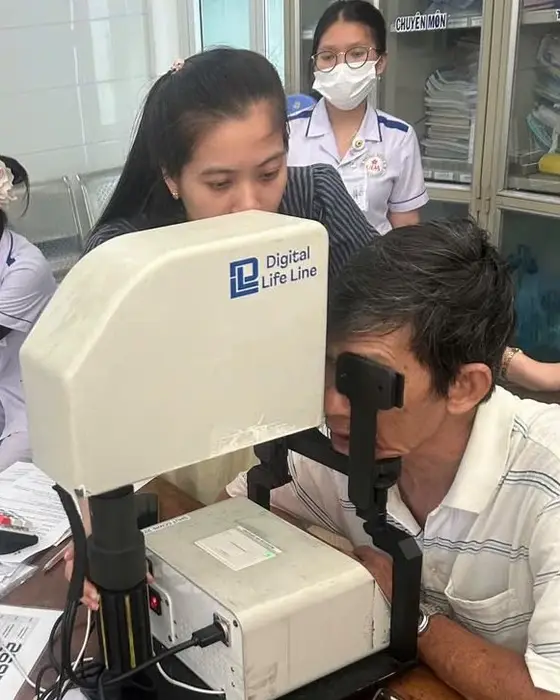
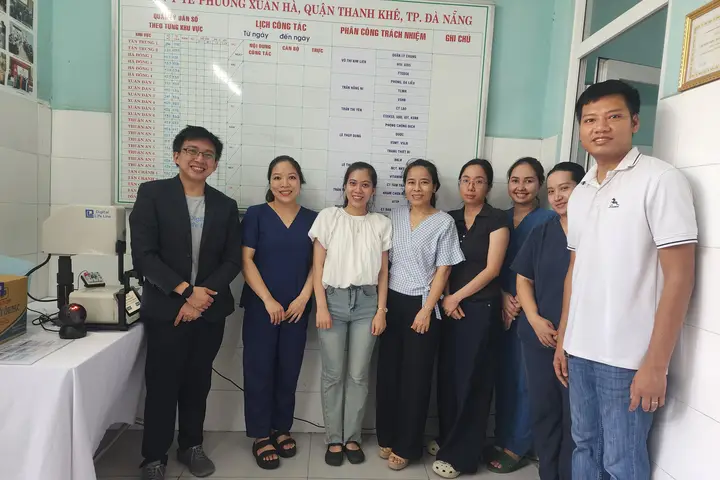
Patients conduct precise visual acuity tests with minimal staff supervision, guided by clear, automated instructions.
Product
How it is shaped
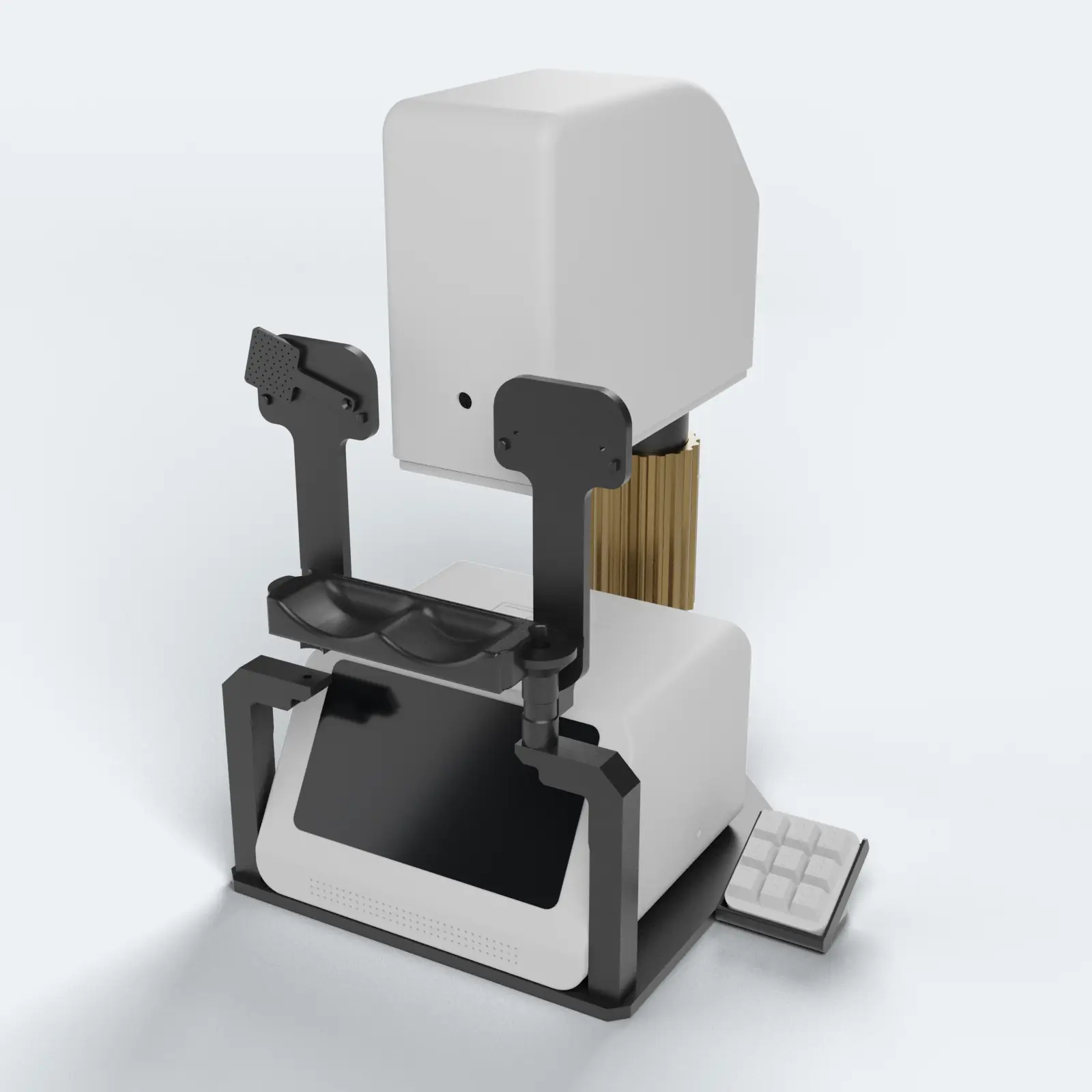
The interactive model needs WebGL, which this browser did not offer. The render above shows the same device.
Interactive model from the production CAD geometry — a render, not a photograph
Capabilities
Core testing capabilities
Fully Automated Self-Testing
Patients conduct precise visual acuity tests with minimal staff supervision, guided by clear, automated instructions.
Precise Distance Simulation
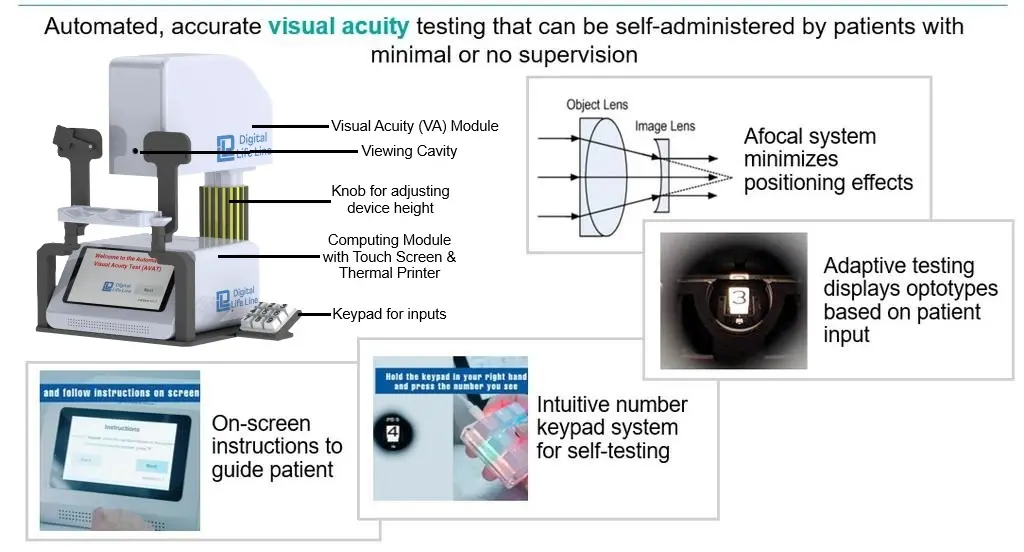
Advanced optics simulate standard testing distance in a compact space.
Auto-Recorded Results
Instantly captures and digitally records final visual acuity scores for each eye, eliminating manual transcription errors.
Consistent Standardized Testing
Every test is administered identically, removing tester variability and improving diagnostic consistency.
Randomized Optotypes
Prevents memorization of eye charts by randomizing letter and symbol sequences.
Intuitive Patient Interface
Simple on-screen prompts with multiple language options, accessible to patients of all ages and tech-literacy levels.
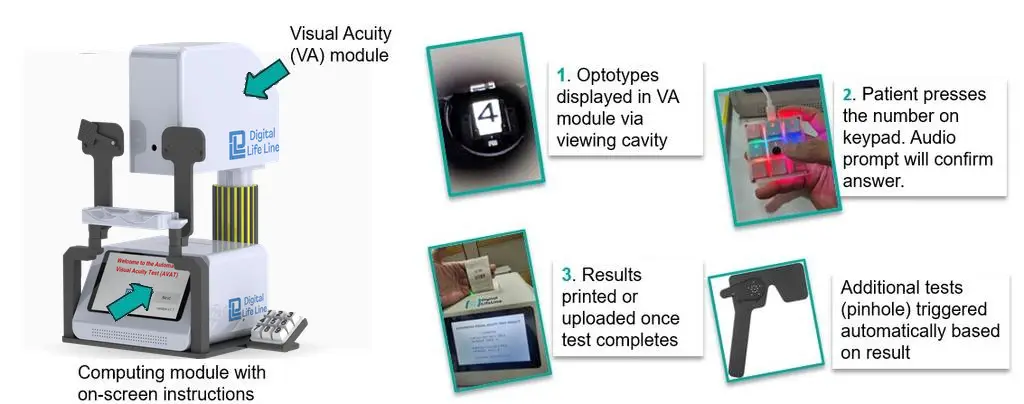
AVAT — visual acuity module, viewing cavity, height-adjustment knob, computing module with touch screen and thermal printer, and input keypad.AVAT self-administered — optotypes in the viewing cavity, answers keyed with audio confirmation, results printed or uploaded, pinhole tests triggered automatically.
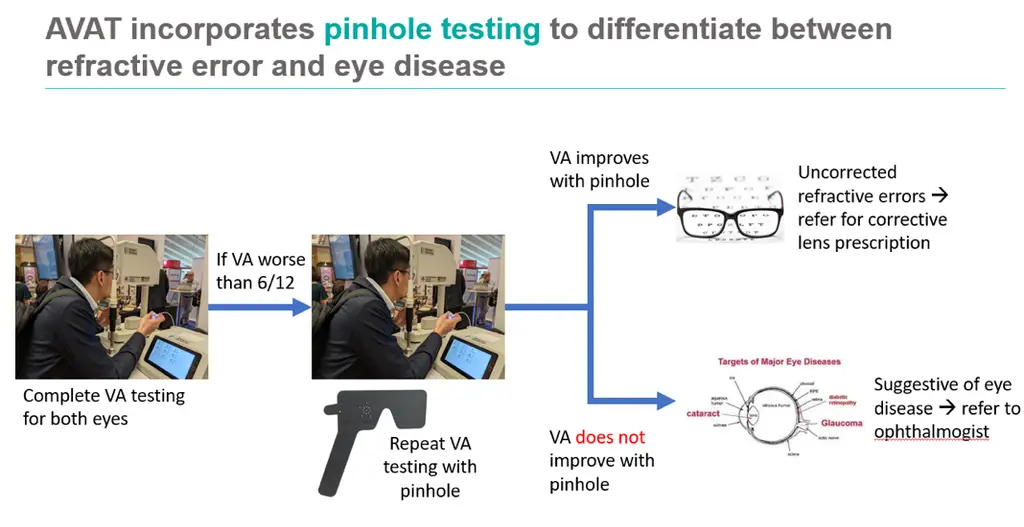
Why AVAT — vision worse than 6/12 is retested with a pinhole: if it improves, a lens prescription; if not, an ophthalmologist.
Clinical & administrative
Clinical & administrative benefits
Frees up technician time, so ophthalmic technicians and assistants can focus on more complex tasks.
Enhanced patient throughput: enables pre-screening in waiting areas or parallel testing in multiple lanes.
In the field
Deployment
20 dots, 6 markets: one for every site in the field record that has a published AVAT photograph. Choosing a dot opens that site's card and photograph.
cnhkidmysgvn
Schematic, not to scale: the markets sit in their real relative positions, north at the top, but the space between them is stretched and sites are grouped by market — the frame is not a map. The two letters by a group are that market’s ISO country code, spelled out under the frame. A dot marks a site with a published photograph of AVAT there; only the deployment named below has a date.
National University Hospital
Singapore
Medical Centre Level 17, 5 Lower Kent Ridge Rd, Singapore 119074
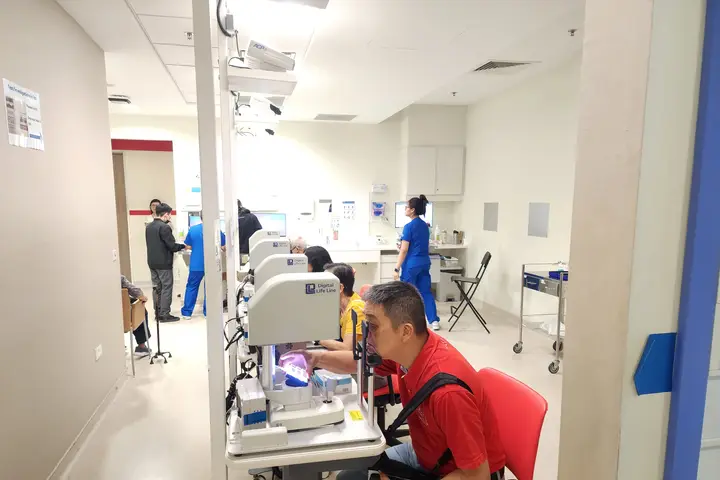
AVAT devices are deployed at the National University Hospital (NUH) ophthalmology clinic in Singapore, serving since 3 February 2025.
Deployed and serving since
National University Hospital, Singapore — 7 July 2025
China
Hong Kong
Indonesia
Malaysia
Singapore
Vietnam
Events
Conferences, exhibitions and demonstrations
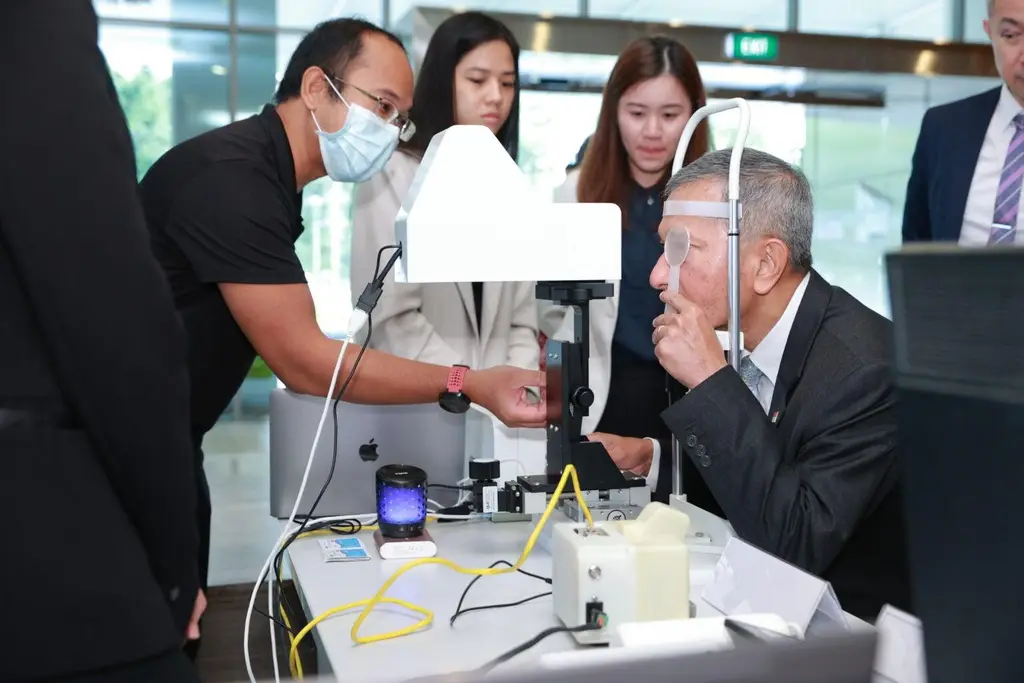
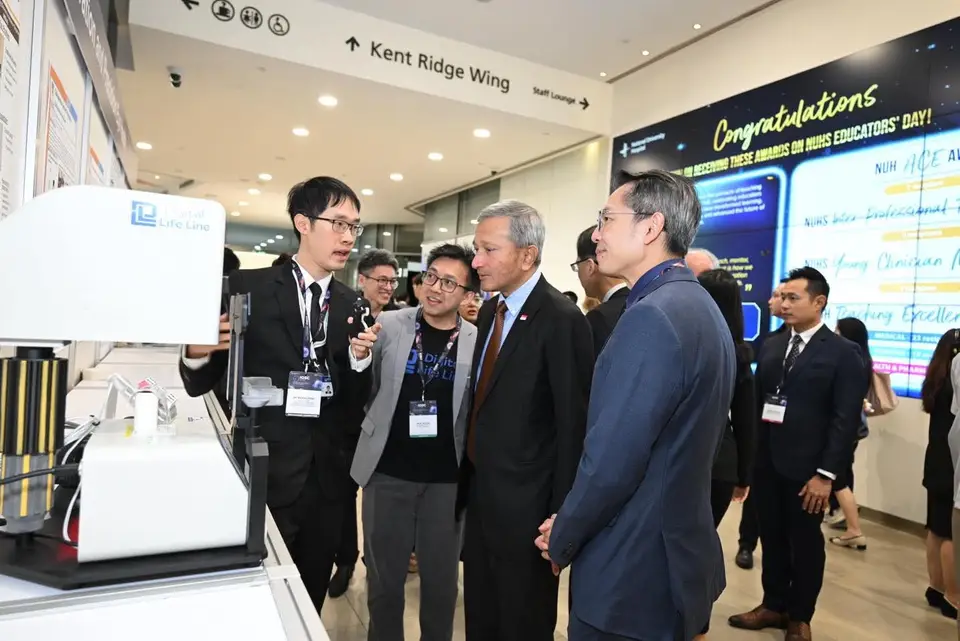
2023 — first test of AVAT by Dr Vivian Balakrishnan. Photograph: NUS MedicineNUH IOSC 2026, 23 October 2026 — the current AVAT, shown to the guest of honour
Field record
Where AVAT has been
27 photographs, 20 sites, 6 markets. A date under a frame is the day that file's own camera wrote; frames whose files carry no date are shown without one.
China
Xnode Vision Screening, China — 21 March 2025
Xnode Vision Screening, China — 2025
Hong Kong
Caritas Medical Centre, Hong Kong — 2 September 2025
Indonesia
APAO 2024, Indonesia
Malaysia
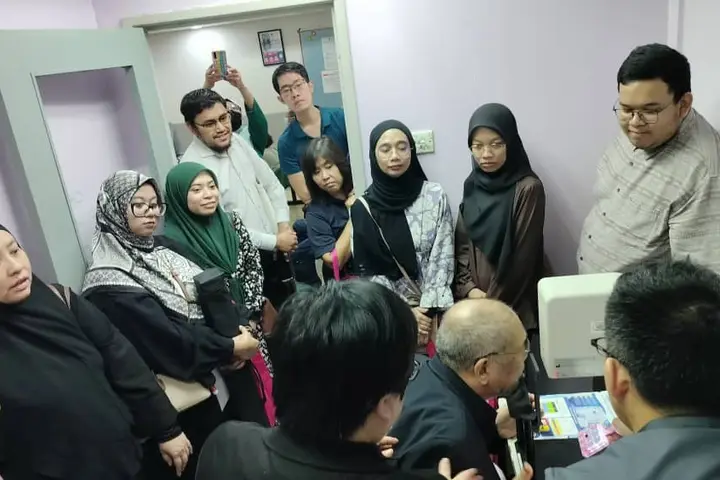
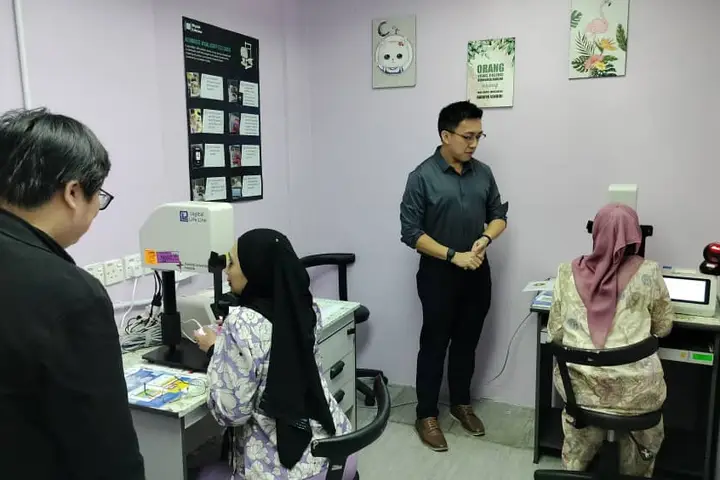
Universiti Malaya Medical Centre, Malaysia — 2025
Universiti Malaya Medical Centre, Malaysia — 2025
Singapore
Agape Christian Centre, Singapore — 2026
Allkin AAC (Sengkang), Singapore — 2024
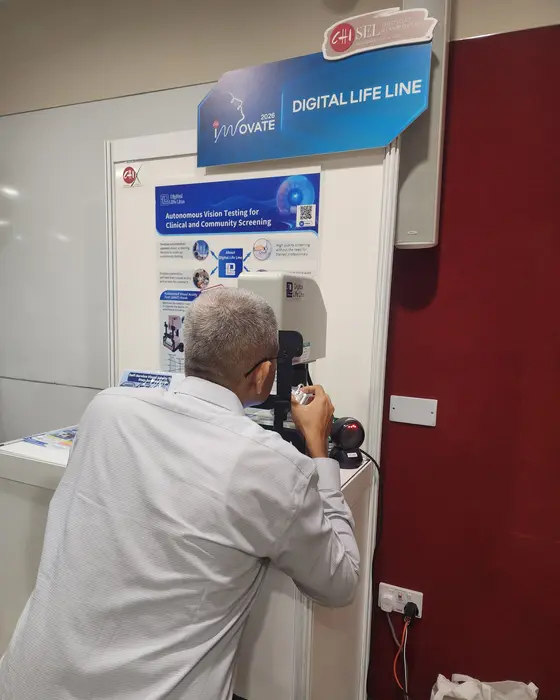
CHI Innovate 2026, Singapore — 3 July 2026
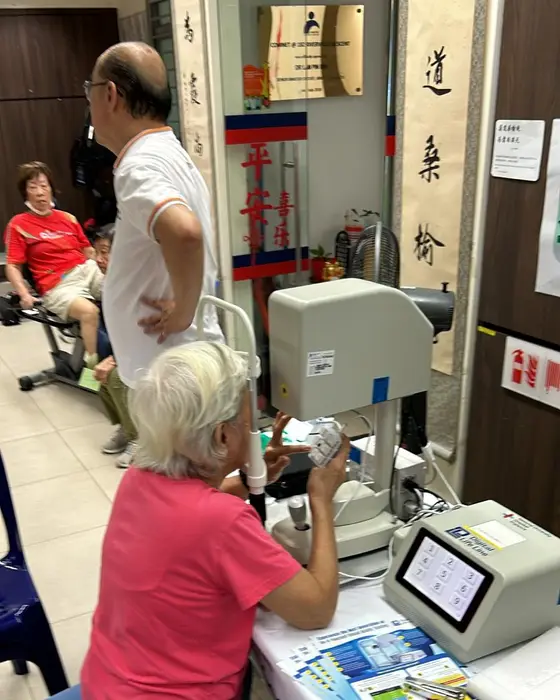
Kwong Wai Shui Care (Potong Pasir), Singapore — 2024
Lions Befrienders, Singapore — 2026
National University Hospital, Singapore — 7 July 2025
NTUC Health (Jurong), Singapore — 2025
Queensway Health District, Singapore — 14 June 2025
Queensway Health District, Singapore — 14 June 2025
Sheng Hong AAC (Sennett), Singapore — 2024
Singapore National Eye Centre, Singapore — 14 January 2026
Singapore National Eye Centre, Singapore — 15 January 2026
Singapore Week of Innovation and Technology 2024, Singapore
St Hilda's CSC (Jalan Batu), Singapore — 2024
THK Active Ageing Centre (Chong Pang), Singapore — 2024